History
Norman and Ralston Grant founded the Twinkle Brothers in Falmouth on Jamaica's north coast in 1962, the year the island declared independence from Britain. Their working life has tracked the wider arc of Jamaican music in the world: the festival circuit of the early independence years, the roots reggae movement of the 1970s, British sound system culture in the 1980s, and a long career in continental Europe that took the group as far as the Polish Tatra mountains. The Twinkle label, which Norman established in Jamaica in 1971 and reactivated from London in the mid-1980s, has released more than sixty of their albums.
To be independent in music means you don't have a company to tell you what to sing - you're singing from your heart
Norman Grant
The Early Years
Falmouth is a small port town, the parish capital of Trelawny, the same parish that later produced Usain Bolt. The Grant brothers grew up there in conditions Norman has described as poor but happy: two families sharing a kitchen, ten shillings a month in rent, the sea on one side and the countryside on the other, and a community where music ran through everything. Both were baptised in the Anglican Diocese and joined the Sunday school choir, when Ralston was eight and Norman six years old.
Church choir was their first formal training, but their education was much wider. Pocomania drumming carried through the neighbourhood. The Junkanoo processions at Christmas filled the streets with noise and spectacle. At home their grandfather played fiddle and their father sang Jamaican folk songs during weekend beach trips. "We learn from their voice" Norman has said. "They sing, and lots of other people sing, your neighbour sings, so you just catch bits"
Without money to buy instruments they built their own using sardine cans as as a make-shift guitar strung with fishing line. Milk cans, old frying pans, and whatever else was at hand became a drum kit. Norman gravitated to drums, Ralston to the guitar. When the obvious materials ran out, they used what was there: a chimmy, the Jamaican word for a chamber pot, ended up in the percussion setup. "A lot of Jamaican bands, that's where they started. Making their own equipment because we didn't have money, or anybody to give us any"
The name came from a Rastaman named "Some-me-say" one evening in Falmouth, where the brothers were rehearsing. He listened to the music and told them to call themselves the Twinkle Brothers and the name stuck.
Independence & the Festivals
When Jamaica cut its ties with the British Crown in 1962, Norman Grant was twelve years old, Ralston fourteen. "When we heard we were getting Independence, we're going to be our own nation, that creativeness bloomed in all of us," Norman said. "We said, okay, we're on our own now. We can do our own thing."
The Jamaican government launched the Pop and Mento Festival the same year, a national competition running from parish level through regional heats to a final in Kingston. For two brothers from Falmouth with no studio connections and no money, it was an opening. They won at parish level on first entry, and at the regional final in Montego Bay the following year the judges' decision went against them while the crowd booed. The same outcome followed in 1963. On the third attempt, in 1964, they took the regional heat and went on to Kingston, where they won the group category in the same year that Norman took the solo category outright.
By 1968, six years into competition, they left the All Island Festival with two gold medals on the same night: one as the Twinkle Brothers, one for Norman as solo performer. Toots and the Maytals were competing in the professional category at around the same period, four or five times, as Norman remembers it, the whole generation passing through the same circuit. For acts coming up without industry connections, the festival was the one mechanism that did not require you to know anyone to be heard.
That creativeness bloomed in all of us. We said, okay, we're on our own now. We can do our own thing.
Norman Grant
Kingston: Studios and the Hotel Circuit
By the mid-1960s the Grant brothers were working two circuits at once: the hotel trade and the Kingston studio system.
The hotel work came through the Cardinals, a Falmouth band of professionals (lawyers, accountants, teachers) who took Norman and Ralston on as, in Norman's later phrase, "the only ghetto youth in the band". They played hotels all over the island six nights a week while attending school in the daytime, covering calypso and soul, Beatles ballads, James Brown, Smokey Robinson, the Impressions, the Temptations. "Knowing all those melodies helps you create your own style, and helps you not to clash with music that's already made." After the Cardinals they passed through Schubert and the Miracles and eventually spent around eight years in the Celestial band, based in Montego Bay, earning about £20 a week and recording two albums aimed at the tourist trade; those records still command large sums on the collectors' market. Along the way they cut a reggae version of "Little Green Apples" long before Dennis Brown recorded it.
Kingston was harder to break into. Ralston had spent time at Cobbler Camp, a technical college where students could train as electricians and in other trades, and it was there he encountered Aston "Family Man" Barrett, the future Wailers bassist and one of the most recorded musicians in reggae, singing in the choir. Norman stayed with an aunt and other relatives in August Town and Trenchtown, sleeping on floors, living on whatever was available. "Just eat dumpling and butter," as he later put it. They queued for auditions at every major label. At Prince Buster's studio they were picked to record, but the Maytals were in the middle of a session, and when the Maytals' time was up, so was theirs: "We never got to record," Ralston recalls. The same thing happened at Studio One. Duke Reid gave them their first group single in 1966, "Matthew, Mark, Luke And John" - the room had no headphones, and Norman had to turn his back to the piano to hear what he was playing over it. Duke Reid rarely set foot in the studio himself, but he did that day, Ernest Ranglin remarking that he must have liked the tune to have come in for it. They were paid in six copies of the record rather than cash. In those Kingston years they met Bob Marley, Desmond Dekker, Alton Ellis, and Jimmy Cliff, the whole generation passing through the same rooms.
In 1970 they placed third in the Jamaica Festival Song Contest, and the six finalists were told to present themselves to the producer Bunny Lee the following morning. They went to Randy's Studio at 17 North Parade, recorded, mastered, and pressed inside two days, with Family Man and his brother Carlton on the session. Those subsequent sessions were the first the Soul Syndicate, Jamaica's foremost studio rhythm section, ever cut together. Lee recorded around fourteen songs with them across multiple sessions and taught them the business side: PRS, publishing, how studios operated, and who owned what - giving Norman the means to do it himself.
By 1974 they were booking sessions under their own steam, working with the drummer Sly Dunbar, the bassist Lloyd Parks, and the keyboardist Ansel Collins. That year they became the first act ever to rent Treasure Isle studio outright from Duke Reid, who had never let the room to another act before - though the band had already cut tracks there for Duke Reid's own sessions, including "I Love You So" in 1971. "Jahovia" followed in 1978, recorded during one of their later stints in the room, with the Barrett brothers on drum and bass.
Rasta & Roots
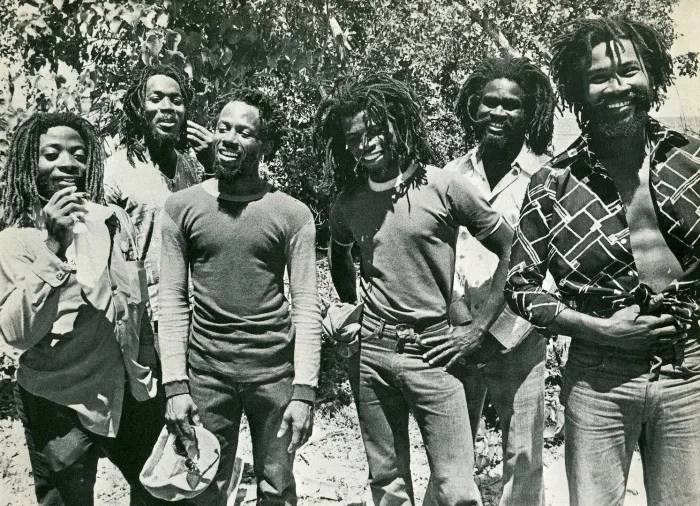
Ralston Grant, standing outside before dawn in Falmouth in 1974, watched a full moon. In the shadow of a cloud passing across it, the face of Haile Selassie appeared, then shifted into the form of a child of about ten years old. "I was kind of scared to go back in the house," he recalls. "I came back out and looked up again. And I said, well, stick on the locks". He grew his dreadlocks that year. Norman's own path toward Rastafari had been building longer and more quietly. There had been Rastamen around Falmouth since he was fourteen, and Haile Selassie had visited Jamaica in 1966, by which time Norman was already making music. The faith, for him, was less a single conversion moment than a deepening conviction. "It was about more about self-reliance".
"Rasta Pon Top" came out on the independent label Grounation in the UK in 1975. In the British reggae market of the time, five thousand copies was considered a good outcome for an LP. The record was direct and unambiguous in its intent, with tracks such as "Give Rasta Praise" and "Beat Them Jah Jah", the work of a band fourteen years out of Sunday school choir and the hotel lounge circuit, and now openly Rastafarian. "We were going to the studio singing 'I'm hungry, fire for Babylon,'" Ralston said. "Sad songs, but we're happy, dancing off the sadness. For some reason the world loved it!".
These songs are not going to tell you to take a gun and kill that man because he is wicked. We can tell you that you're wicked, with a smile.
Ralston Grant
America
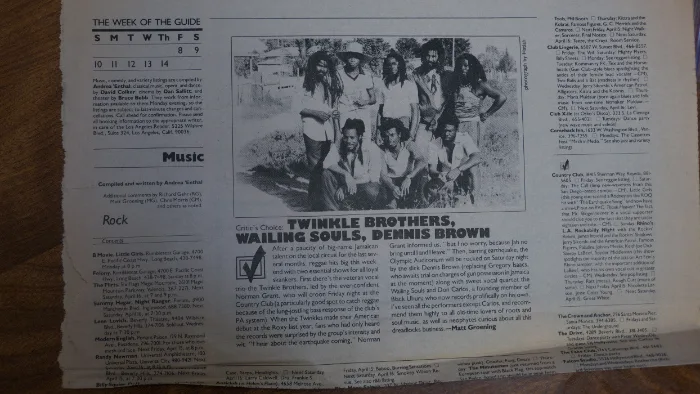
In 1982 reggae was breaking in the United States in the wake of Bob Marley's death the previous year, and the Twinkle Brothers arrived in Los Angeles for their first American dates. At the Roxy on Sunset Strip, before the band had finished setting up, the reggae archivist Roger Steffens, who had been collecting and broadcasting Jamaican music for years, ran onto the stage. The show started and the band weren't even set up properly! John Belushi was even in the crowd that night.
UCLA students and West Coast reggae fans had been following the band from a distance for years. "When Twinkle Brothers came back" Norman recalled, "they said I never knew you were so great live". Further dates followed at the Country Club and the Olympic Auditorium - conerts which we take on legendary status..
Among those watching and writing about it was a young cartoonist working as an arts and music critic for the LA Reader. Matt Groening, who would later create The Simpsons, was a regular at Twinkle Brothers shows during this period and covered them in print more than once. His reviews captured the energy of what was happening. Roots reggae landing in Los Angeles with a force that surprised people who thought they had it figured out. "Fans who had only heard the records" he wrote, "were surprised by the group's intensity and wit". That review was filed from a show the year after the Roxy debut, by which point the Twinkle Brothers had become a fixture on the West Coast circuit.
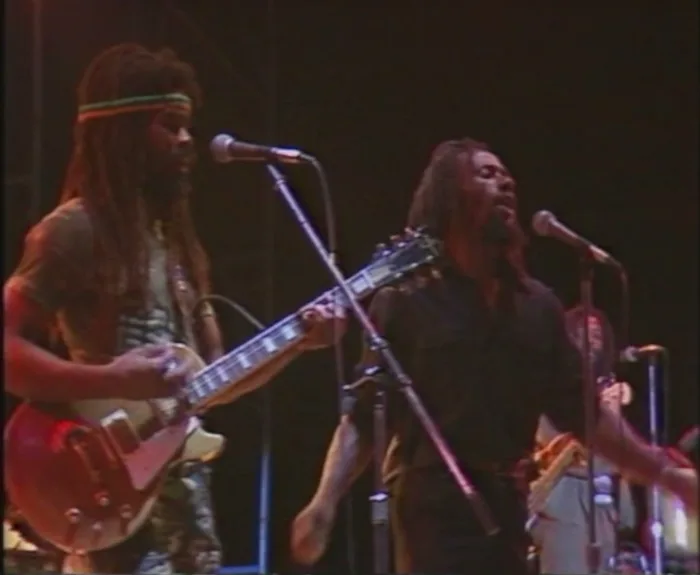
Booked for Reggae Sunsplash in August 1982, the Twinkle Brothers took the stage at Jarrett Park, Montego Bay, Sunsplash then at its height as the centre of world reggae. They had returned to Jamaica as an international act, recognised at home after years on the road as working musicians. It would be the last time the band has performed in the shores of Jamaica. Luckily the full show was filmed and the audio released on LP.
England
Norman had been making regular trips to England since 1975. From 1976 the label Carib Gems was distributing his music there, releasing "Do Your Own Thing" the following year. Letters arrived from England telling Norman that his songs were being pirated. In 1978 he flew over with four songs, a local reggae A&R man known as Wenty connected him to Virgin Records, then a young independent label operating out of the Portobello Road area. He played the tracks to a room of around ten people that included the label's co-founders Simon Draper and Richard Branson. Virgin would release "Love", the first 10-inch reggae record released in England.
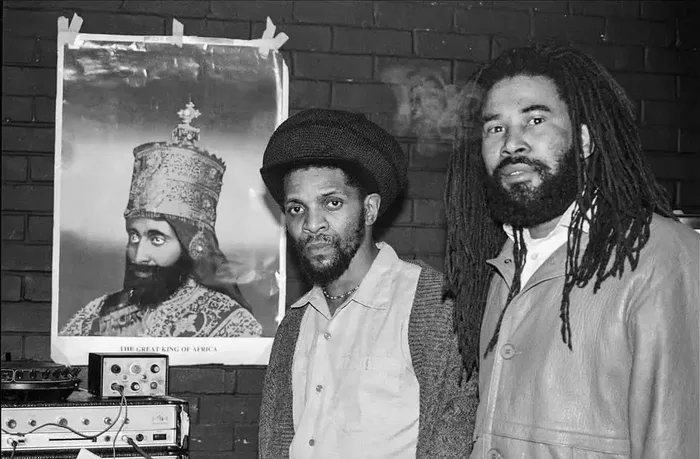
The Virgin deal was set to run five years for three LPs. Their reggae operation, working through the Frontline imprint, brought the Twinkle Brothers to a new audience. The punk generation drawn to roots was the same one buying Sex Pistols records, and Virgin put them on the same compilation albums: the Sex Pistols, the Twinkle Brothers, and the Gladiators all on one record. "Just like the skinheads loved ska, the punks loved roots" Norman noted. Virgin released "Praise Jah" and "Countrymen", gave the band five sessions across the decade, then cancelled the deal early and closed their reggae operation entirely. When the contract ended, Norman put out music on his own Twinkle label, first established in Jamaica in 1971 and now reactivated in England - its first UK release was "Me No You - You No Me" in 1981. They toured with Inner Circle in 1980, and the first dedicated UK tour came in 1981.
After America and Sunsplash, Norman made England his permanent home. His friendship with Jah Shaka went back years by then. Shaka, born Neville Powell in Clarendon Parish, Jamaica, ran one of the most significant sound system operation in British reggae history out of South East London. His dances had become a kind of institution and his influence carrying forward into jungle, drum and bass, and dubstep. Shaka also ran the Culture Shop in New Cross, a community hub combining a record store, Caribbean food, and a Rastafari hair salon. The Twinkle Brothers were a fixture of his regular selection, Norman a constant presence at his dances, and Shaka would seek him out whenever he wanted new dubplates. The two collaborated in the early 1980s on "Revelation 18", a landmark of UK roots reggae ther recording coming about when Shaka picked up the bass guitar while the regular Twinkle brothers bassist was on a toilet break! When the Polish radio journalist Władek Kliszcz came to London in 1986 looking for Jamaican artists, it was at the Culture Shop that he and Norman met. Norman took up UK residency the same year.
Poland: An Unlikely Meeting of Cultures
Norman Grant was born in 1950. When he was ten or eleven, the cheapest shoes available in Jamaica, strong durable leather, were made in Poland. He would not set foot in the country until he was thirty-eight.
Kliszcz worked for Polish state radio and came to London in 1986 on holiday, aware that Jamaican artists had been settling in England. He made contact with Norman and arranged an interview at Jah Shaka's Culture Shop, delivering a simple message that the Twinkle Brothers were popular in Poland, and Norman needed to come see for himself. What Norman found when he arrived in 1988 was a country still under Communist rule, Solidarity live in the streets, soldiers at the airport, and young people cheering from the pavements as the car moved through the city. The studio was another matter, a 24-track facility for £1.20 an hour, against £25 or more in England. Norman made eight albums and was paid in millions of złoty that could not be taken out of the country, so he bought leather coats, seventeen of them at five złoty apiece, loaded three suitcases, and sold them in London for £75 to £85 each. "If I never count millions again," he said in 2023, "I've counted millions in Poland".
An earlier visit had produced something else, an underground LP released in 1984 with the Solidarity logo on the cover, pressed outside official channels and circulated through the networks keeping the movement alive.
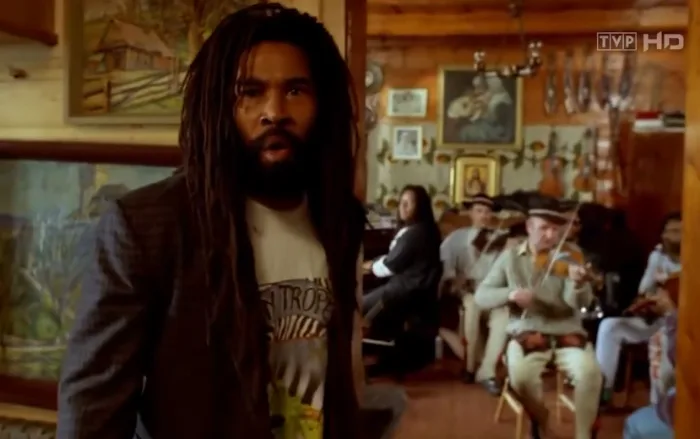
Kliszcz also introduced Norman to Trebunie-Tutki, a family band from Zakopane in the Tatra Mountains who played traditional Polish highland music. Norman and the bassist Dub Judah travelled there and lived with the family for a week, eating, sleeping, and rehearsing in the house, with Anna, the sixteen-year-old daughter of the family band, serving as translator. At Spirit Studio in Zakopane, ganja growing in the garden outside, Norman told Judah how they were going to approach the recording: "We have to create our own beat. Don't follow them". They laid bass and drum first, then brought the violins in, in the end making four albums together. The Twinkle Brothers went to number one on Polish radio above Michael Jackson. The TVP documentary "Higher Heights" filmed them in Zakopane in 1992 (the album of the same name followed the next year), and they band even featured in a polish film called "Girl Guide" which came out in 1995. They picked up a Gold record for "Songs Of Glory · Pieśni Chwały", a long overdue collaboration record released in 2008.
The money Norman accumulated in Poland funded the purchase of his London recording studio in 1995. "Even that," he said, "is another memory for Poland."
If I never count millions again, I've counted millions in Poland.
Norman Grant
The Living Legacy
The Twinkle Brothers continue to perform and record under Norman Grant's leadership. The current lineup took four decades to assemble, and cuts a wide path through the history of UK reggae.
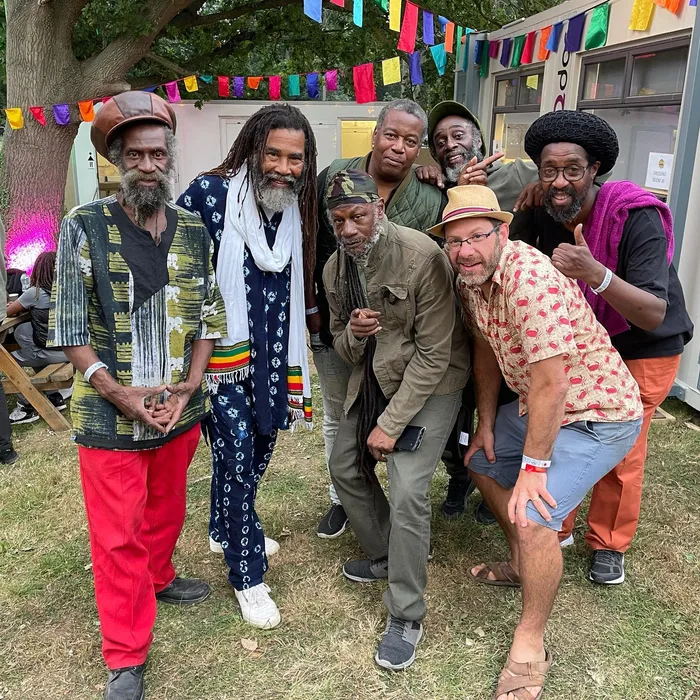
Norman and Ralston Grant have been at the centre since 1962. Norman has run the band from the UK since 1986, writing the original lyrics and leading the touring operation. Ralston, based mainly in Oakland, California, has continued to record on the Twinkle label from his own studio there, and his voice carries some of the most important tracks in the catalogue, including the lead vocal on "Jahovia". The bassist Dub Judah, on the band since 1990, is a UK dub producer and recording artist in his own right, and the same musician who made the journey to Zakopane and laid down the rhythmic foundation the Trebunie-Tutki violins were built on. The guitarist Black Steel, with the band since 1986, is a UK lovers rock and roots multi-instrumentalist whose extensive credits include work with Mad Professor and Jah Shaka. Jerry Lions, also on guitar since 1987, is a long-standing reggae producer and former member of the Fasimbas. Derek "Demondo" Fevrier, a veteran UK reggae producer, has been the band's engineer since 1986. The keyboardist Aron Shamash and the drummer Barry Prince complete the line-up, both having joined in 2004.
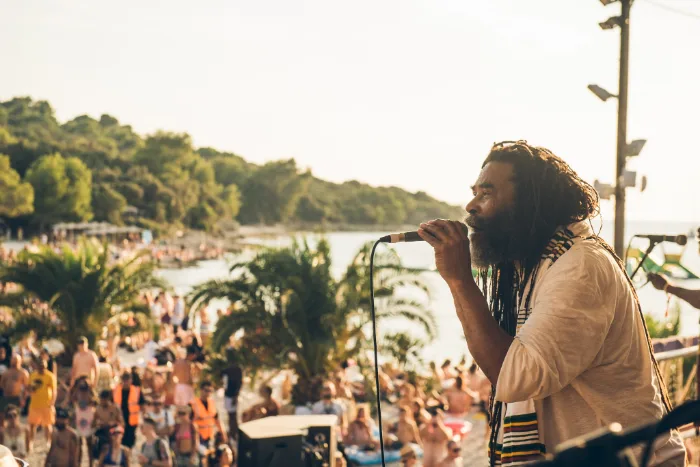
The band has not performed in Jamaica since Sunsplash in 1982, but its working life has covered the West Coast of the United States, Brazil, Chile, South Africa, and almost every major reggae festival in Europe, including Rototom Sunsplash, City Splash in London, Outlook Festival, Shambala, Bestival, Reggae on the River, Reggae in the Park, the Helsinki Reggae Festival, Holland's Reggae Eruption, the Ostróda Reggae Festival, and regular dates across Germany, Poland, Spain, and France, where the band has built a particularly loyal following over many years. The catalogue runs to more than sixty albums. Norman, now in his seventies has been putting down roots in Jamaica again. He has built a house with a performance venue on the top floor, and runs a youth club there of the kind he used as a boy growing up in Trelawny. The group that began on sardine can guitars in a small port town has gone to number one in Poland, played six continents, and collaborated with mountain musicians in the Tatra highlands. Norman makes music every day. Asked about returning to perform in Jamaica, he has said: "It's getting to the time now".